
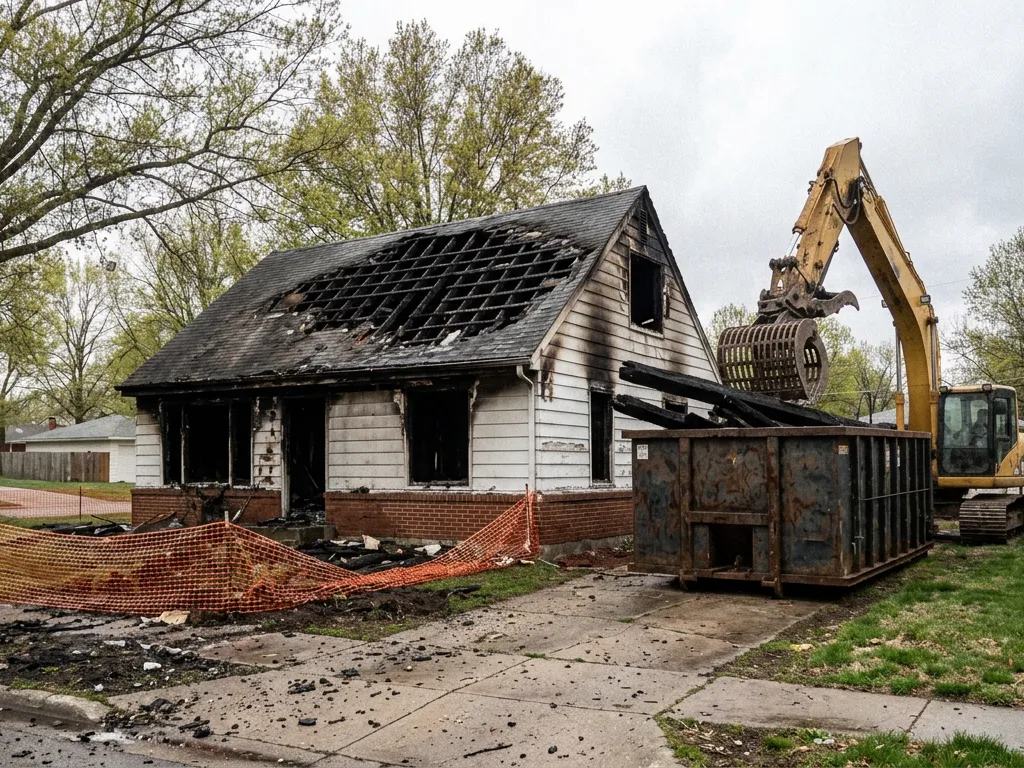
After the fire
Independence Demolition Pros: Fire-Damaged House Demolition in Independence, Missouri
Burned houses taken down once the insurer and the fire marshal release them, with the charred debris hauled, the foundation dealt with and the lot left clean for the rebuild or the sale.
- Independence and 10 towns within 20 miles
- Written price before any work starts
- City permit, utility and asbestos steps explained
- Local, licensed, insured contractors
Independence Demolition Pros connects Independence owners with local contractors for fire-damaged house demolition, the teardown that waits on an insurance adjuster and sometimes a fire investigator before anyone can touch the structure. Once the release comes, the crews we work with secure the site, test for asbestos in what survived, take down what is left and haul the wet, charred debris, which weighs more and smells worse than anything else in the trade.
Tearing into a burned house before the adjuster's written release can void a claim worth $100,000 or more to save a few weeks; the demolition itself runs $10,000 to $21,100 and the insurer usually pays it, so the order of events is the whole job.
What it costs
$10,000 to $21,100
Fire demolitions are priced from the same Kansas City house range (HomeBlue, May 2024) because the structure, basement and lot drive the number. Wet, charred debris is heavier per yard and may need lining or covering for the haul, and a house that burned with asbestos siding or floor tile intact is tested and abated like any other. Most policies cover debris removal as a line item.
Calls answered Monday to Friday 7 a.m. to 6 p.m., Saturday 8 a.m. to 2 p.m.
What owners are dealing with after a fire
- A structure the fire department has fenced or posted as unsafe to enter
- Roof and second floor collapsed into the basement, with standing water from the suppression
- An adjuster's report that calls the house a total loss
- A dangerous-building letter from the City arriving while the claim is still open
- Neighbors asking when the smell and the sightline are going away
The order of events after a fire
Nothing moves until the insurer says it can. The adjuster documents the loss, a fire investigator may need the scene preserved, and the written release to demolish comes after both. In the meantime the lot is fenced and the openings boarded. Then the City of Independence permit is filed with the same checklist as any teardown, the asbestos inspector samples what survived, the utilities are verified off (the fire department usually has the gas and electric killed already, but the City still needs its verifications), and the excavator arrives.
- Release
- Written release from the insurer, and the investigator where one is involved, before demolition
- Permit
- City of Independence demolition permit; the dangerous-building process can run alongside
- Debris
- Charred, wet material is heavier per load and may be covered for the haul
Asbestos in a burned house
Fire does not remove asbestos; it exposes it. Siding, floor tile, pipe wrap and joint compound in a pre-1980 house are still there in the debris, and Missouri rules still require a licensed inspector before demolition. Where the material is friable from the fire and the water, the abatement step is more careful, not less. The asbestos page explains the thresholds and the notice.
Insurer released the house?
Say where it is, whether the release is in hand, and whether the basement is involved. A local contractor prices the teardown and the debris haul in writing, in the form your adjuster expects.
Call (816) 846-2347Partial loss or total loss
A kitchen fire that gutted two rooms may be an interior demolition and a rebuild, with the roof and the framing saved. A fire that reached the attic and the structure usually ends with a total loss and a full teardown, including the basement, which is often full of water and debris. An engineer or the adjuster decides which, and the contractor prices the path chosen.
Fire demolitions in the towns around Independence
The insurance sequence is the same in Lee's Summit or Liberty; the permit office changes. When the fire leaves a structure the City has declared dangerous, the dangerous-building demolition page explains how that process runs beside the claim.
Fire-Damaged House Demolition available in
Frequently asked questions
What owners ask before a teardown
How much does it cost to demolish a fire-damaged house in Independence?
It is priced from the same Kansas City house range, $10,000 to $21,100, with the heavier wet debris and any asbestos handling added. Most policies carry debris removal as a line item.
Can the house be torn down right after the fire?
Not until the insurer gives a written release, and a fire investigator's release where one is involved. Demolishing early can void the claim. Fencing and boarding happen right away.
What are the signs a burned house is a total loss rather than a repair?
Fire that reached the attic and the framing, a collapsed roof or floor, and an adjuster's report that prices repair above the finished value. A kitchen fire confined to two rooms is usually a gut and rebuild.
Does a burned house still need an asbestos inspection?
Yes. Fire exposes asbestos rather than destroying it, and Missouri rules require a licensed inspector before demolition. Friable material from the fire and the water is handled more carefully, not less.
Will the City's dangerous-building process interfere with the claim?
It can run alongside it. Telling the City that a claim is open and a demolition is planned usually keeps the two on the same schedule.