
Independence Demolition Pros: What to Expect on Demolition Day in Independence
Independence Demolition Pros wrote this for the Independence, Missouri owner who has signed the contract, watched the permit and the asbestos notice run their course, and now wants to know what the next week looks like. The honest version is that demolition day is loud, fast and mostly uneventful when the paperwork was done right, and that the days after it, when the basement is broken and filled, are where the quality of the job is decided.
Standing inside the fence on demolition day to grab one more thing from the house is the mistake that turns a routine $10,000 to $21,100 teardown into an injury claim and a stopped job; everything worth keeping comes out the week before, and the cost of a second trip for the crew is far less than the alternative.
The week before
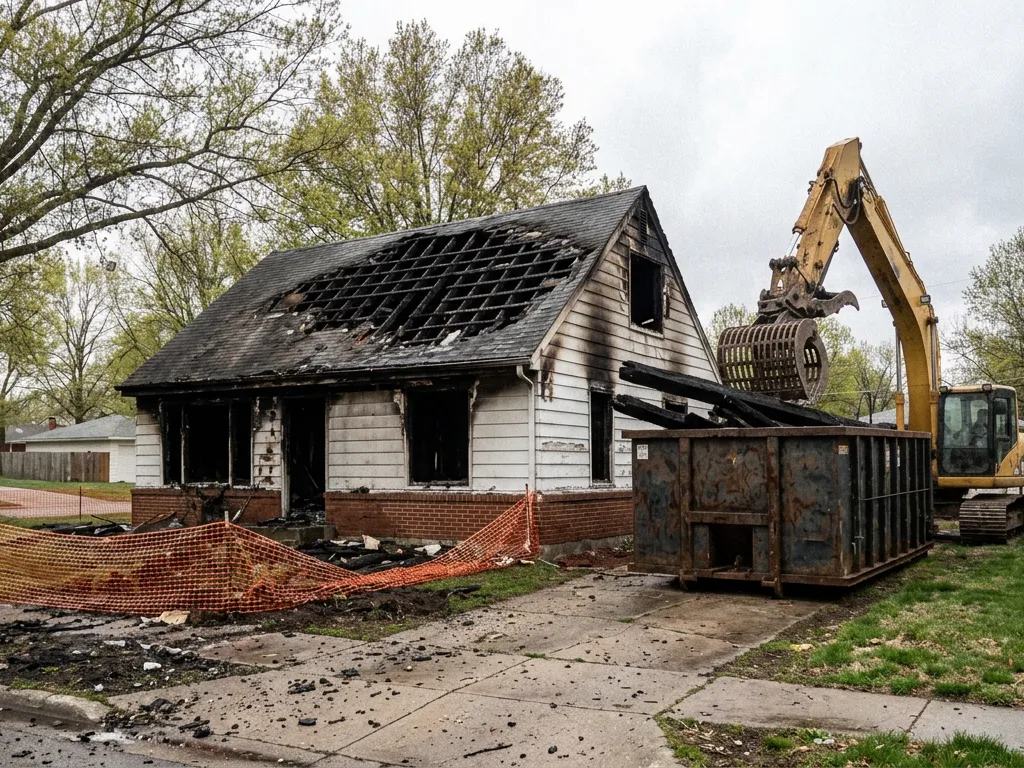
By now the asbestos inspection is done and any abatement is finished, the ten-working-day notice has run, the City has pulled the water and electric meters, Spire has killed the gas, Municipal Services has inspected the sewer kill with the silt fence, and the permit has issued. The owner's jobs in this week: remove everything to be kept, including fixtures to be sold; tell the neighbors the date and that the street will have trucks on it; and confirm with the contractor where the roll-offs and the machine will sit. If salvage was part of the plan, the doors, floors, fixtures and brick come out now, by hand.
The morning of the first day
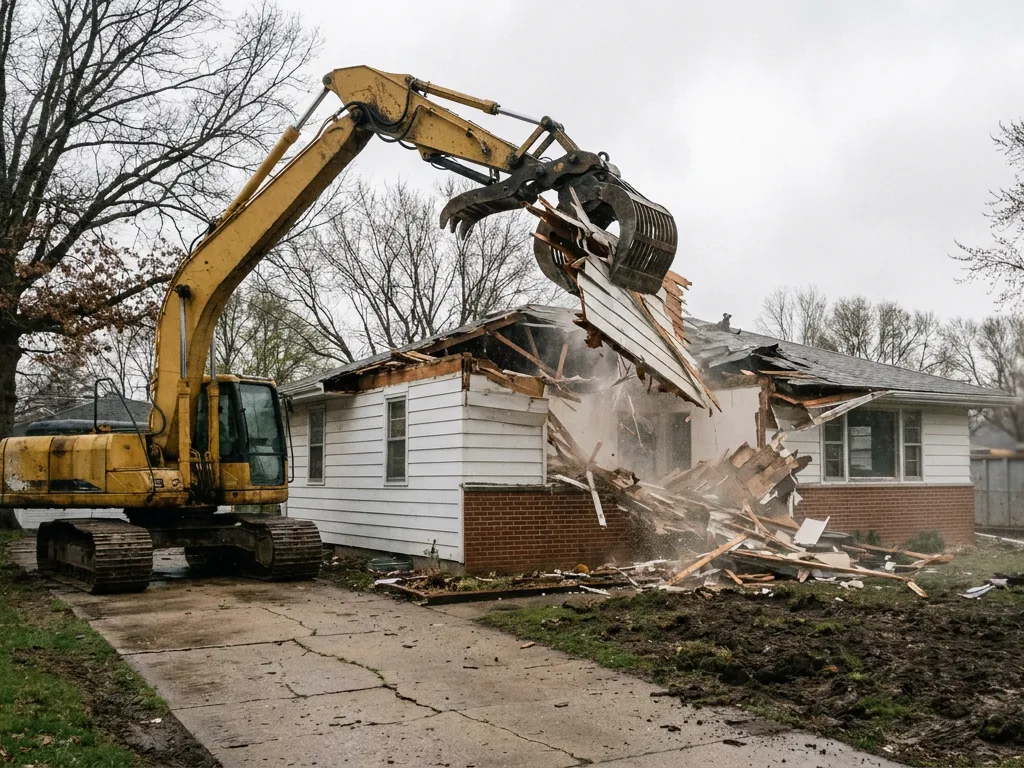
The excavator arrives on a lowboy early, usually with a skid steer, and the crew walks the lot once more: the locates from Missouri One Call are checked, the silt fence is checked, the overhead lines are noted, and the first roll-off is placed. The crews we work with start at the back or the end farthest from the neighbor's house and work toward the street, and the first thing to come off is usually the roof, in sections, with the grapple, while a hose keeps the dust down. By midday a one-story house is open to the sky; by the end of the day the walls are down and the first loads have gone out. It is loud. It is not dangerous to anyone outside the fence, and the fence is the point.
- Machines
- Tracked excavator with grapple; skid steer with breaker and bucket
- Hauling
- Roll-off dumpsters or end-dump trucks, by the load
- Dust
- Water hose or water truck on the structure as it comes down
- Owner
- Outside the fence, reachable by phone, nothing left inside
The second day, loading out
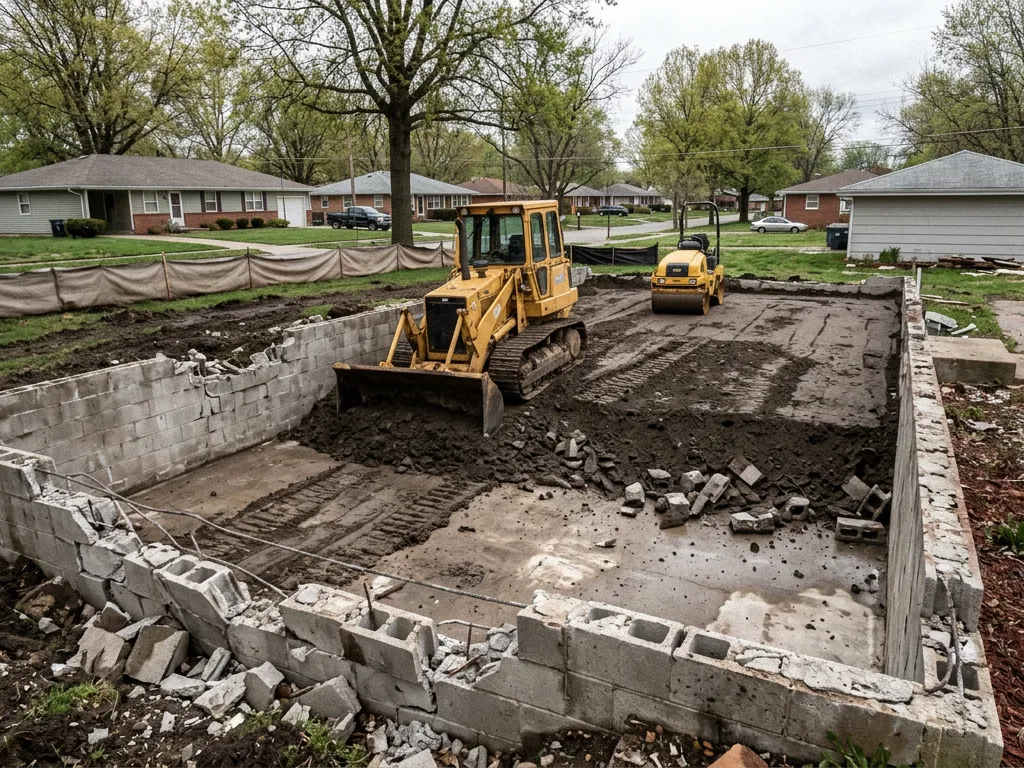
Most of the second day is hauling: the grapple sorts clean concrete and scrap metal to their own piles for the recycler and loads the mixed debris into roll-offs. The number of loads is the number the quote priced, and a house with a basement produces more than its size suggests once the floor system comes out. The driveway and any slab come out now if the contract says they do, with the skid steer's breaker. By the end of the second day a typical Independence lot has a hole where the house was, with the block walls standing.
A written price from a local demolition contractor costs nothing to ask for, and it settles most of the questions in this guide for your own property.
Call (816) 846-2347The basement, the fill and the grade
The third day is where the job is won or lost. The basement walls are broken below grade or pulled out entirely, depending on what the lot is for; the slab is cracked in a grid so water drains; the rubble that stays goes to the bottom. Then the fill arrives by the truckload, and it goes in about a foot at a time with a compactor over each lift. A 1,000 square foot basement seven feet deep takes 20 to 25 loads and one to three days. The last lift is crowned, the lot is graded to shed water away from the neighbors, and seed goes down unless a builder is taking the lot next week. The basement fill-in page explains why one pour fails on Independence clay.
The final inspection and the paperwork
Before the inspection, the crew walks the lot line with a magnet and a rake. Nails, wire, roofing staples and broken glass travel farther than the debris pile suggests, and a lot that is going to be mowed or built on is checked for them before the seed goes down. The silt fence stays up until the grass takes, which in a Missouri spring is three to four weeks, and the contractor comes back to pull it. If a neighbor's drive or the street took mud from the trucks, it is swept before the crew leaves; the City's right-of-way permit for the water cap makes the contractor responsible for that, and a good crew does it without being asked.
The City's final inspection confirms the structures and signs are gone, the sewer is killed and the lot is stable; if abatement was part of the job, the hazardous-material landfill tickets go to the City before that inspection. The contractor hands over the landfill and recycler tickets for the rest, the inspection report and the notice copy. Keep all of it: a buyer, a lender or a builder will ask. A house in Lee's Summit runs the same days with that city's 28-day clock on the fill; a house in Independence runs them under the City checklist published at independencemo.gov. What the lot looks like at the end is whatever the quote said, and the house demolition page is where that conversation starts.
Primary sources: the City of Independence checklist and erosion-control requirement at independencemo.gov, the Missouri asbestos program at dnr.mo.gov, the federal asbestos program at epa.gov, and Kansas City's demolition bulletins at kcmo.gov.
Frequently asked questions
Questions this guide gets asked
How many days does demolition day actually take?
One to three for the structure, one to three more for the basement and fill. A one-story house with good access is down on day one and loaded out on day two.
Do I need to be there?
No, and the crews we work with prefer the owner outside the fence and reachable by phone. Everything to be kept comes out the week before.
What happens to the debris?
Clean concrete and metal go to recyclers, mixed debris to a licensed landfill, and any asbestos waste to the landfill under its own tickets. The contractor hands over every ticket at the end.
Will the neighbors' property be affected?
The fence, the silt fence and the hose keep debris, mud and dust on the lot. The street carries trucks for two or three days, which is why the neighbors are told the date.
What should the lot look like when it is finished?
Whatever the quote said: usually foundation out or broken below grade, fill compacted in lifts, the lot graded to drain and seeded, with the sewer killed and the water capped at the main.
Need demolition in Independence or the eastern Kansas City metro?
One call describes the job to a local contractor who prices it in writing after a walk-through. The line is (816) 846-2347.
More from the guides
-
Best demolition companies in Independence
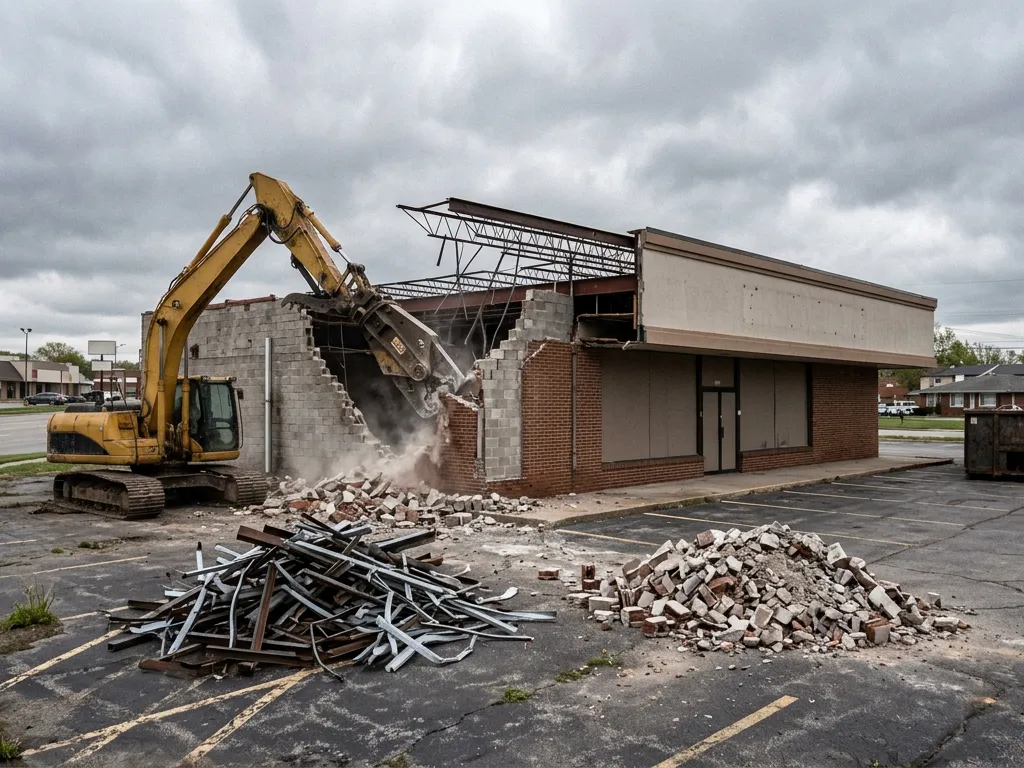
Five demolition operations serving the eastern metro, ranked by verifiable history, this site last.
Read more
-
House demolition cost in Independence
Every published range from a chimney to a commercial building, and what moves each number.
Read more
-
The Independence demolition permit
The application, the insurance naming the City, the meter pulls, the sewer kill, the fees and the historic review.
Read more