
Independence Demolition Pros: Signs a House Should Be Demolished in Independence
Independence Demolition Pros hears a version of the same question several times a week from Independence, Missouri owners: is this house a project or a teardown? The answer usually turns on three parts of the structure and one piece of arithmetic, and it helps to know which signs matter before a contractor or an inspector names them.
A $5,000 foundation patch on a basement that is bowing in Independence clay buys a few years and is lost when the house is torn down anyway; the same money toward a $10,000 to $21,100 teardown and a new foundation is money that stays in the lot.
The foundation first
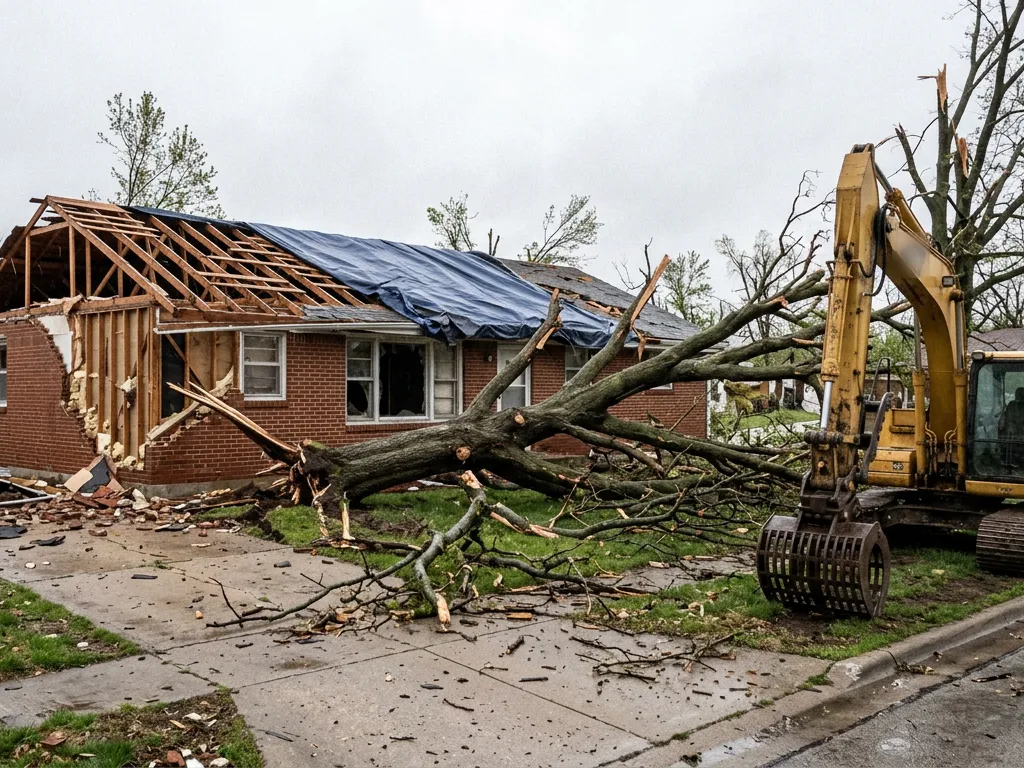
Most Independence houses from the growth decades sit on full basements of concrete block, and the loess clays under the city shrink and swell with the seasons. The signs that matter are horizontal cracks along a mortar joint partway up a wall, a wall that bows inward when you sight along it, stair-step cracking that runs through the block rather than along it, and a floor above that has gone out of level. Hairline vertical cracks are not on that list; they are shrinkage. A bowed wall can be braced or rebuilt, but once two walls are moving, or the wall has displaced more than an inch, the repair bids start to approach the price of a new foundation, and a new foundation under an old house rarely makes sense.
The roof framing, not the shingles
A roof that needs shingles is a repair. A roof that has leaked long enough to rot the rafters, the ridge and the ceiling joists is a structural problem, and the signs are a sagging ridge seen from the street, daylight at the eaves, soft spots when the roof is walked, and ceilings that have stained, dried and stained again for years. Once the framing is gone, the fix is a new roof structure on old walls, and the walls under a roof that has been open to water are usually not worth building on.
Fire, water and the things inside the walls
Fire that stayed in two rooms is a gut and a rebuild. Fire that reached the attic and charred the framing is a total loss more often than not, and the adjuster's numbers usually say so. Water is slower: a basement that has flooded repeatedly, a plumbing failure that soaked the subfloor for weeks, or a house that sat with the roof open through a winter leaves mold in the framing and rot in the sills, and the cost of opening every wall to find it is the cost of an interior demolition before the repairs even begin. In a pre-1980 house, that gut also means handling asbestos tile and lead paint, which is money spent either way.
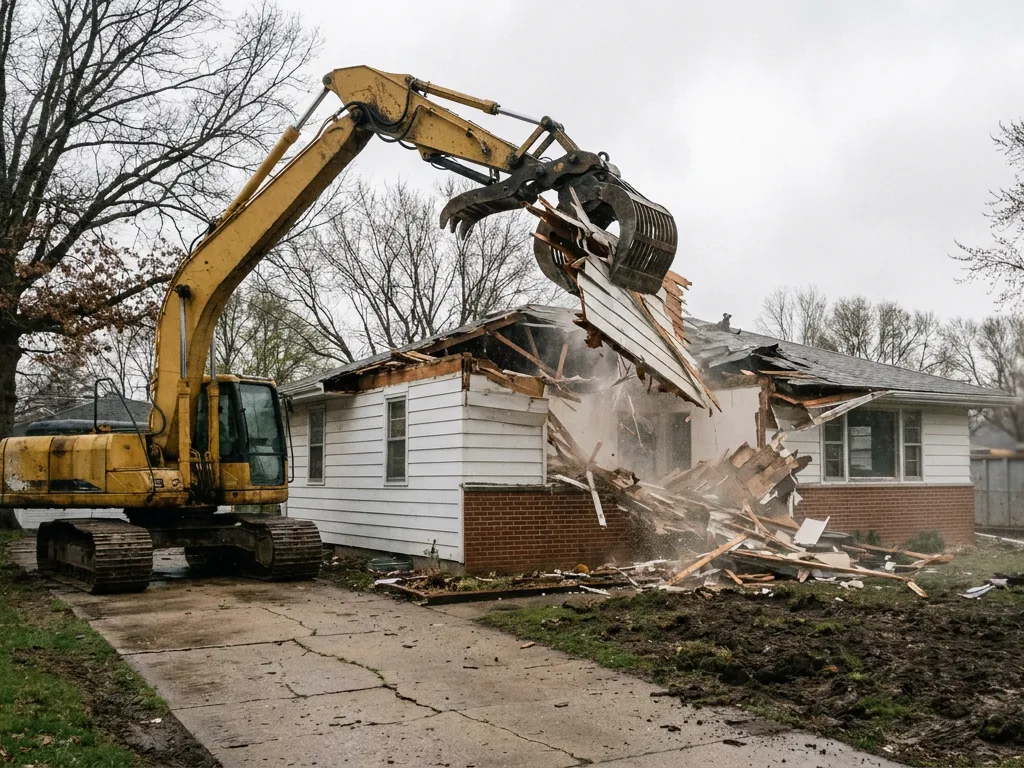
A written price from a local demolition contractor costs nothing to ask for, and it settles most of the questions in this guide for your own property.
Call (816) 846-2347The arithmetic
Before the arithmetic, one more sign that is easy to miss: the basement after a hard rain. Walk down the morning after a storm and look at the floor line. Water coming in at the cove joint where the floor meets the wall is a drainage problem; water seeping through the face of the block, or standing an inch deep across the slab, means the wall and the footing drain have failed together, and in Independence clay that failure does not stay fixed. Add a sump pump bill, a waterproofing bid and a wall brace bid to the list below before you compare it with anything.
Add up the repair bids: foundation, roof structure, framing, systems, finishes. Compare the total, plus what the house is worth as it stands, against what the finished house would sell for. When the repair total passes the finished value, the house is a teardown, and in Independence the published range for the teardown is $10,000 to $21,100 for a house, the basement houses at the top. A contractor can price both paths on one visit. Owners on the older streets sometimes hesitate because the house is part of the neighborhood's character, and in Englewood, Mount Washington or Fairmount the City's historic review may share the hesitation; that is a reason to ask the Heritage Commission early, not a reason to spend repair money on a structure that is failing.
- Foundation: two walls moving, or more than an inch of displacement
- Roof: ridge sagging, rafters and joists rotted, daylight at the eaves
- Fire reached the attic; water sat in the framing for a season
- Repair total plus current value exceeds finished value
- A dangerous-building notice already names the structure
What to do once the answer is teardown
Order the asbestos inspection, because its lab turnaround and the state's ten-working-day notice are the longest wait in the schedule. File the City permit the same week. Then get the written price. A house with a failing foundation in Gladstone or Raytown goes through the same decision on the same clay, with a different permit office. The house demolition page walks through the sequence from there, and the City's dangerous-buildings rules, for a house that has already been posted, are on the City's site at independencemo.gov.
Primary sources: the City of Independence dangerous-buildings rules at independencemo.gov, the Missouri asbestos program at dnr.mo.gov, the federal lead-paint rules for pre-1978 houses at epa.gov, and Kansas City's dangerous-building ordinance at kcmo.gov.
Frequently asked questions
Questions this guide gets asked
What are the signs a house should be demolished?
Basement walls bowing or cracked horizontally, a roof structure rotted through, fire that reached the attic, water that sat in the framing, and a repair total that passes the finished value of the house.
Can a bowed basement wall be repaired instead?
One wall, moving less than an inch, usually can be braced or rebuilt. Two walls moving, or more displacement than that, brings the repair close to the price of a new foundation.
Is a house with asbestos a teardown?
Not by itself. Asbestos adds an inspection and possibly an abatement step to either a remodel or a demolition. It becomes a factor when the gut needed to repair the house means handling it anyway.
How much does a teardown cost compared with a major repair?
Published Kansas City figures put a house demolition at $10,000 to $21,100. When the foundation, roof structure and framing repairs together pass what the finished house would sell for, the teardown is the cheaper path.
Who decides whether a house is dangerous?
The City of Independence, under its dangerous-buildings process, which posts the structure and gives the owner a period to repair or demolish. An engineer or the City's building inspector can look at a house that has not been posted.
Need demolition in Independence or the eastern Kansas City metro?
One call describes the job to a local contractor who prices it in writing after a walk-through. The line is (816) 846-2347.
More from the guides
-
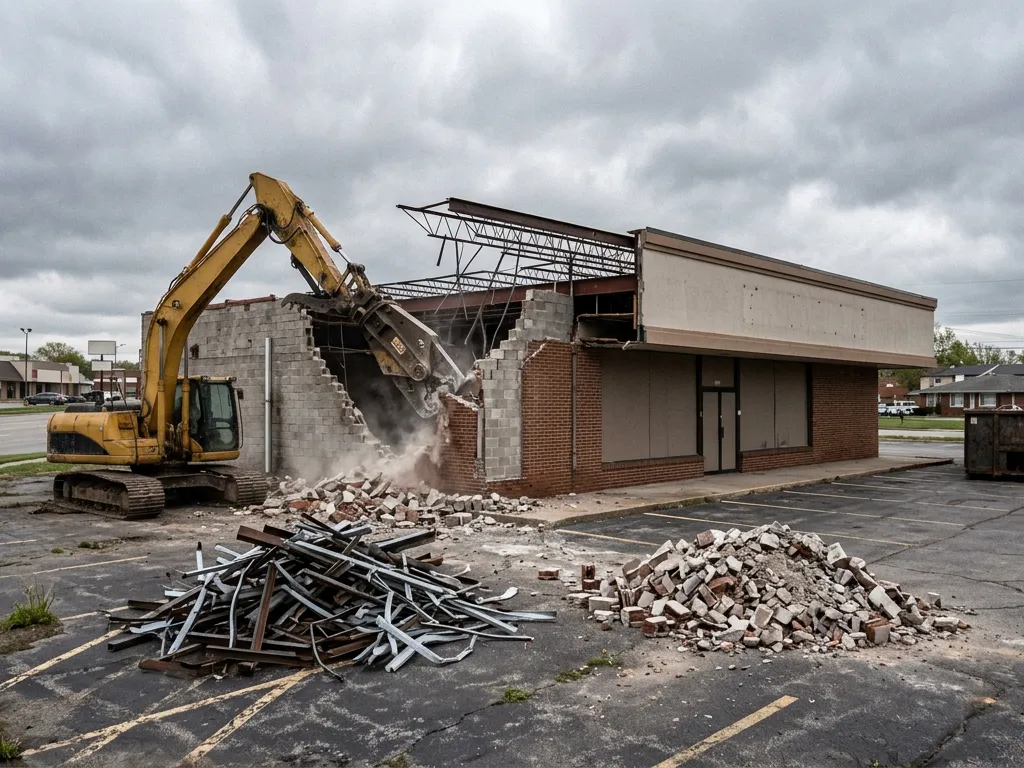
Best demolition companies in Independence
Five demolition operations serving the eastern metro, ranked by verifiable history, this site last.
Read more
-
House demolition cost in Independence
Every published range from a chimney to a commercial building, and what moves each number.
Read more
-
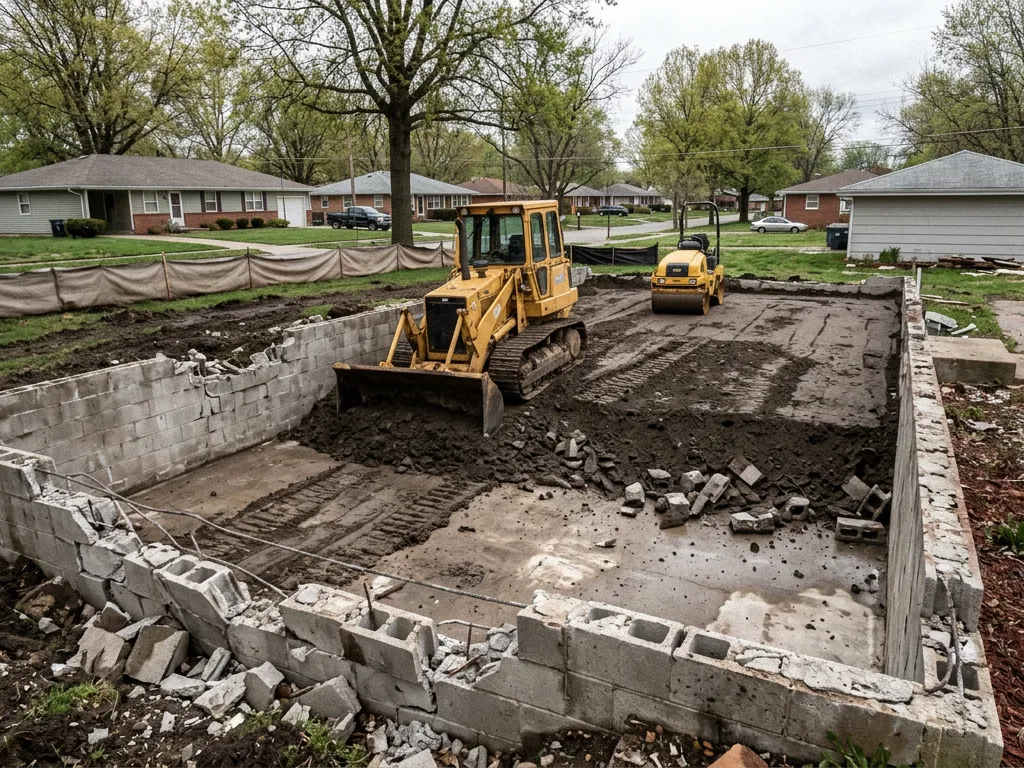
The Independence demolition permit
The application, the insurance naming the City, the meter pulls, the sewer kill, the fees and the historic review.
Read more