
Independence Demolition Pros: Deconstruction vs Demolition for an Independence House
Independence Demolition Pros gets asked about deconstruction by Independence, Missouri owners who have heard that a house can be taken apart for salvage instead of knocked down, and who want to know whether that is cheaper, greener, or both. The short answer is that demolition is faster and usually cheaper, deconstruction returns materials and sometimes a tax deduction, and most Independence teardowns end up as a mix of the two.
Paying for a full deconstruction of a 1960s ranch with nothing in it worth saving can cost $5,000 to $10,000 more than a $10,000 to $21,100 demolition and return a few hundred dollars of lumber; the walk-through is where that mistake is avoided.
What each word means on a job site
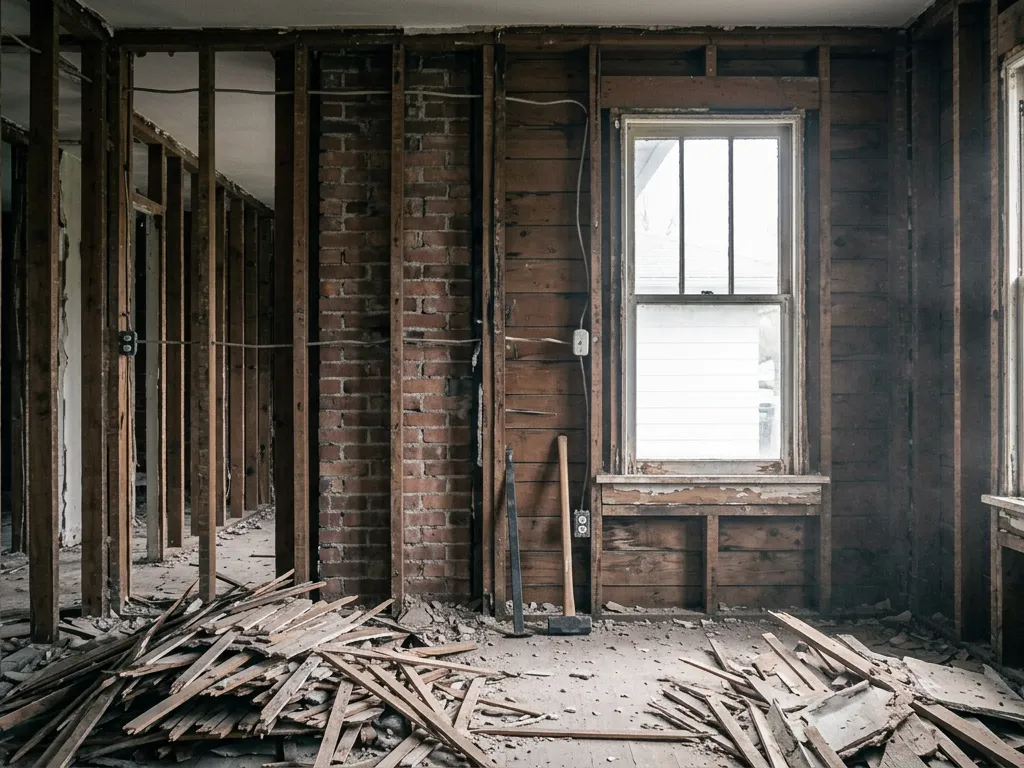
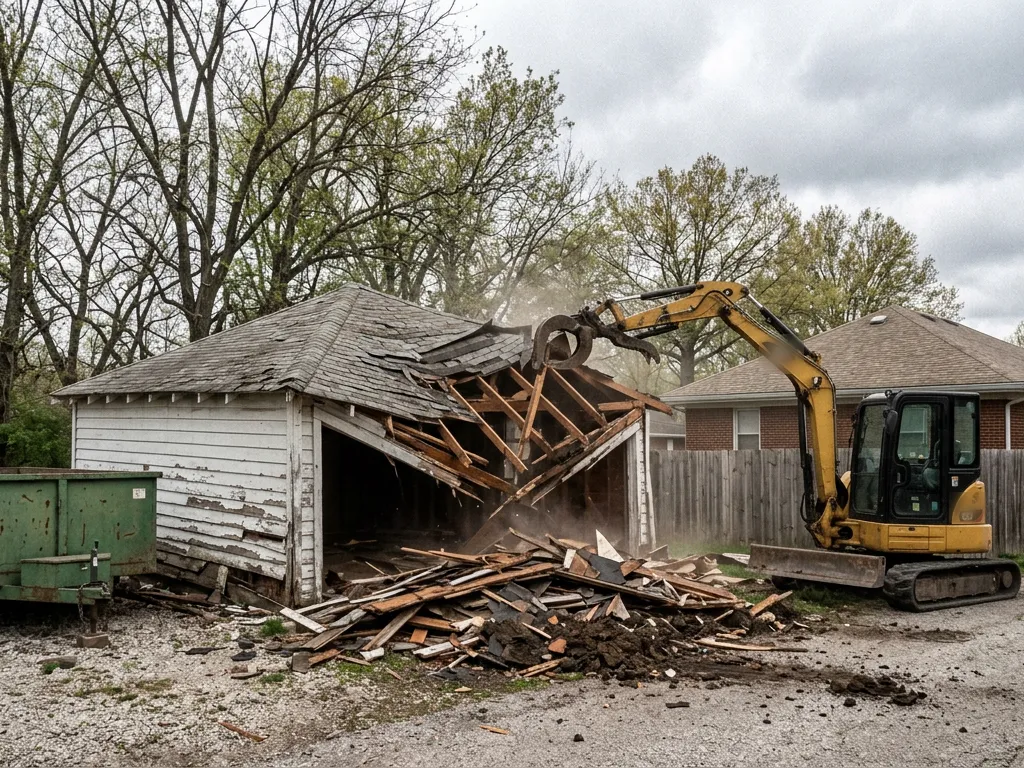
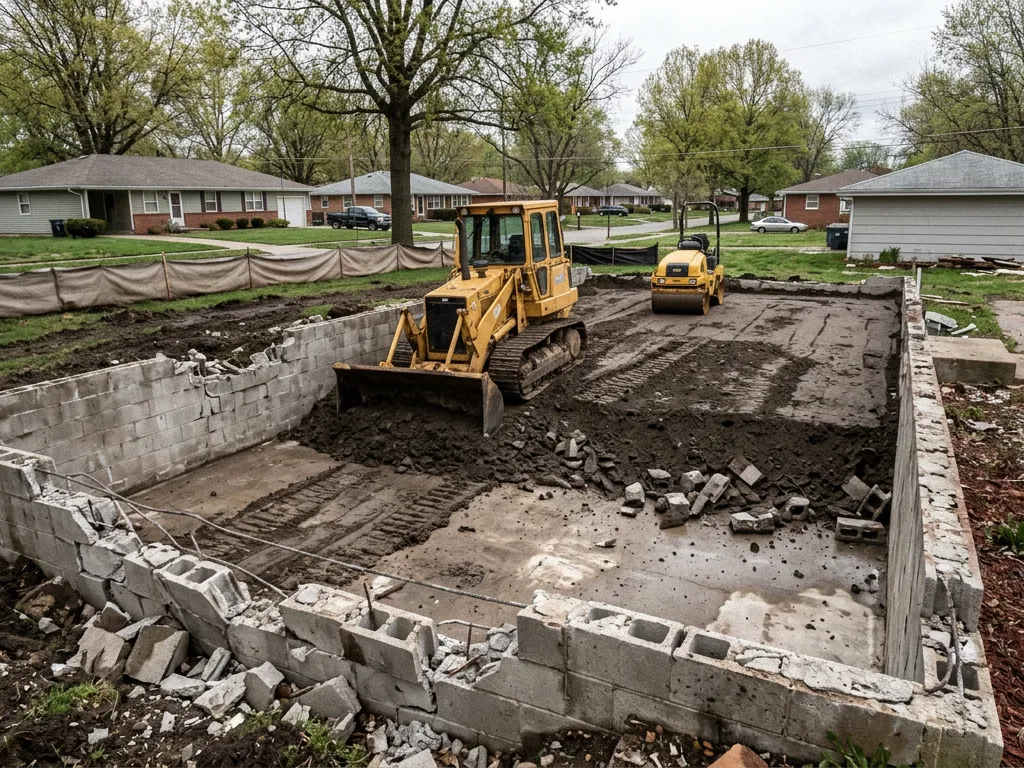
Demolition is mechanical: an excavator with a grapple takes the house down in sections and loads the mixed debris into roll-offs, and the whole structure is gone in one to three days. Clean concrete and scrap metal are still sorted for recycling, because they are cheaper to recycle than to landfill, but the wood, drywall, roofing and finishes go out as one stream. Deconstruction is manual: a crew takes the house apart in roughly the reverse order it was built, pulling fixtures, cabinets, doors, windows, flooring, trim, framing lumber and brick for resale or reuse, and only the unsalvageable remainder goes to the landfill. It takes one to three weeks and a larger crew, and it ends with the same foundation to deal with as any teardown.
| Demolition | Deconstruction | |
|---|---|---|
| Time on site | 1 to 3 days | 1 to 3 weeks |
| Labor | Machine and two or three people | Crew of several, by hand |
| Debris | Mixed, with concrete and metal sorted | Most material reused or recycled |
| Cost | Lower | Higher, offset by salvage and a possible deduction |
| Foundation | Same work either way | Same work either way |
What an Independence house gives back
It depends on the decade. The 1910s to 1930s houses of Englewood, Procter, Mount Washington and Fairmount were built of old-growth dimensional lumber, with hardwood floors, solid doors, built-in cabinets, brick chimneys and sometimes limestone foundations, and all of that has a market. A 1950s or 1960s ranch gives back less: the lumber is smaller and often nailed with a pattern that splinters when pulled, the cabinets are plywood, the floors are oak under carpet (worth saving) and the rest is drywall and composition. A 1970s or later house gives back the least. The crews we work with walk the house with that in mind and will say when a partial salvage, pulling the floors, doors, fixtures and brick before the excavator arrives, captures most of the value at a fraction of the deconstruction cost.
What it costs, and the deduction
Demolishing a house in Kansas City runs $10,000 to $21,100 in HomeBlue's guide. Full deconstruction is not published for the metro; nationally it runs well above demolition because of the labor, and the gap is closed, sometimes entirely, by two things. Salvaged material donated to a qualified nonprofit reuse organization can be appraised and deducted; the appraisal has to be independent and the paperwork is the owner's, not the contractor's. And the landfill bill shrinks, since tipping fees are paid by the ton and deconstruction sends far less. Whether the arithmetic works depends on the house: on a lath-and-plaster bungalow with hardwood throughout it often does, on a 1960s ranch it rarely does.
A written price from a local demolition contractor costs nothing to ask for, and it settles most of the questions in this guide for your own property.
Call (816) 846-2347The part that is the same either way
One more thing is the same: the schedule is set by the paperwork, not the crew. A deconstruction crew can start pulling floors the week the contract is signed, but the structure itself cannot come down until the City permit has issued and the Department of Natural Resources' ten-working-day notice has run, so the extra weeks of hand work usually overlap the waiting rather than adding to it. On a lot with a closing date, that overlap is the argument for a partial salvage: the valuable material comes out while the permit runs, and the excavator takes the rest on the day it was going to anyway.
Neither path skips the City of Independence demolition permit, the insurance certificate naming the City, the meter pulls, the sewer kill or the erosion control. Neither skips the Missouri asbestos inspection, and deconstruction makes it more important, since people are handling every material by hand; floor tile, pipe wrap and siding found in testing are abated before anyone starts pulling. And neither path changes the basement fill-in: the walls still come out or get broken below grade, and the hole is still filled in compacted lifts. Owners in Liberty face the same choice under that city's 18-inch foundation rule, which applies to both.
Choosing
Pick demolition when the house is postwar, the schedule is tight, a dangerous-building order or a closing date is involved, or the structure is fire or water damaged, since damaged material has no salvage value. Pick deconstruction or a partial salvage when the house is pre-war, the materials are sound, and there is time for the appraisal and the crew. Ask on the first call: the contractor will say what is in the house worth taking out, and the house demolition page explains the rest of the sequence. The federal rules on noncash charitable contributions, which govern the deduction, are published by the IRS at irs.gov.
Primary sources: the federal rules on noncash charitable contributions at irs.gov, the federal guidance on construction and demolition materials at epa.gov, the Missouri asbestos program at dnr.mo.gov, and the City of Independence checklist at independencemo.gov.
Frequently asked questions
Questions this guide gets asked
Is deconstruction cheaper than demolition?
Usually not on its own. Demolition runs $10,000 to $21,100 for a Kansas City house; deconstruction costs more in labor, and the gap is closed by salvage value, lower landfill fees and a possible charitable deduction.
What can be salvaged from an old Independence house?
From a pre-war house: old-growth framing lumber, hardwood floors, solid doors, built-ins, trim, brick and sometimes limestone. From a postwar ranch: mostly the oak floors under the carpet, fixtures and scrap metal.
Does deconstruction avoid the permit or the asbestos inspection?
No. The City permit, the utility steps and the Missouri asbestos inspection apply to both, and the inspection matters more when people are handling every material by hand.
How long does deconstruction take?
One to three weeks for a house, against one to three days for a mechanical demolition. The foundation work afterward is the same for both.
What is a partial salvage?
Pulling the floors, doors, fixtures, cabinets and brick by hand before the excavator takes the rest. It captures most of the value in a pre-war house at a fraction of the cost of a full deconstruction.
Need demolition in Independence or the eastern Kansas City metro?
One call describes the job to a local contractor who prices it in writing after a walk-through. The line is (816) 846-2347.
More from the guides
-
Best demolition companies in Independence
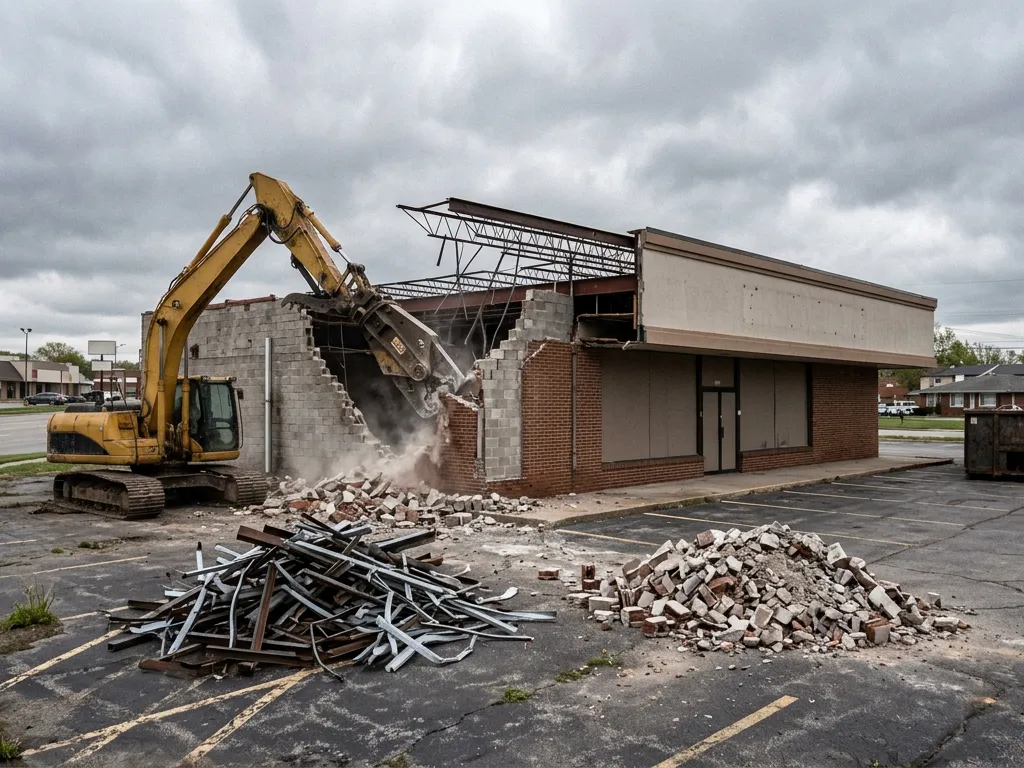
Five demolition operations serving the eastern metro, ranked by verifiable history, this site last.
Read more
-
House demolition cost in Independence
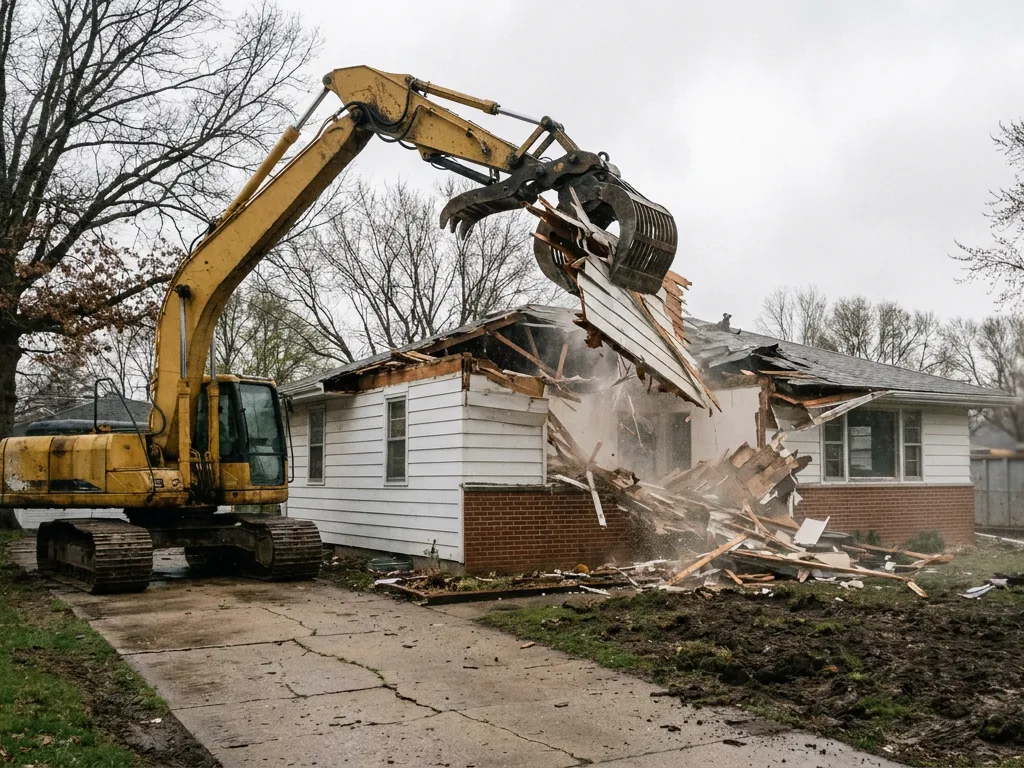
Every published range from a chimney to a commercial building, and what moves each number.
Read more
-
The Independence demolition permit
The application, the insurance naming the City, the meter pulls, the sewer kill, the fees and the historic review.
Read more